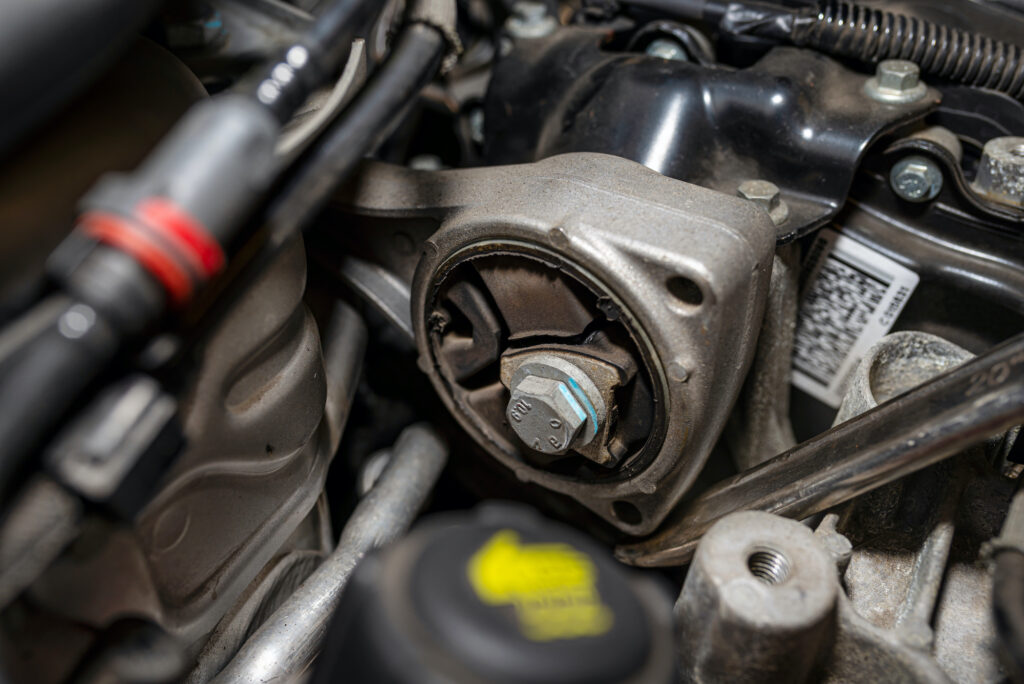
Motor mounts absorb dynamic loads, control torque reactions, and protect the chassis from mechanical stress. When these components fail, vibration, noise, and mechanical wear escalate rapidly. Traditionally, rubber was the standard choice for engine isolation, but polyurethane motor mounts have since become the preferred alternative across performance, heavy-duty, and specialized vehicle platforms. Their superior mechanical properties, chemical resilience, and service life have redefined what engineers expect from vibration isolation components.
PSI Urethanes engineers custom polyurethane motor mounts and engine vibration isolation mounts that meet exact load, temperature, and deflection requirements. We formulate urethanes with precise durometers, from soft, low-deflection grades to high-tensile elastomers capable of carrying extreme engine or drivetrain loads.
Whether the need is for an OEM automotive program or a custom industrial powertrain, PSI delivers consistent, high-precision solutions manufactured entirely in the U.S.
Need stronger, longer-lasting engine mounts? PSI’s custom-cast polyurethane delivers stability and precision under extreme load conditions.
Rubber mounts have long been favored for cost and flexibility, but they degrade quickly under modern engine conditions, especially in high-torque or turbocharged setups. Polyurethane’s molecular structure delivers a higher tensile strength and improved resistance to compression, meaning the mount retains its shape and isolating ability for far longer.
Rubber deforms progressively under load, leading to “engine sag” over time. In contrast, polyurethane engine mounts retain their dimensional stability, allowing them to rebound consistently under cyclic stress. PSI’s proprietary formulations balance stiffness with elasticity to provide controlled movement while maintaining torque restraint. This precision reduces drivetrain lash and helps maintain throttle response and gear alignment.
Under-hood conditions expose mounts to constant oil mist, road salt, hydraulic fluid, and elevated temperatures. Hydrocarbon exposure accelerates the breakdown of rubber, leading to cracks and hardening. Polyurethane resists these effects with far better stability across temperature extremes, maintaining its mechanical integrity from -80 °F up to 250 °F.
PSI’s polyurethane motor mounts are engineered to withstand these environments without softening or delaminating. This chemical and thermal resistance makes them ideal for not just automotive engines, but also marine propulsion, agricultural, and off-highway equipment.
While metal mounts eliminate flex entirely, they transmit vibration directly into the chassis. Polyurethane provides a controlled balance, firm enough to stabilize the engine under torque yet flexible enough to absorb harmonic frequencies. PSI’s engine vibration isolation mounts are tuned to the required natural frequency range of each application, allowing engineers to minimize noise and motion without compromising mechanical linkage.
The effectiveness of a motor mount depends on more than its hardness. The geometry, durometer, and molecular composition of the polyurethane each affect how energy is absorbed and dissipated. Through controlled casting and formulation, PSI tailors these parameters for optimal damping.
Most polyurethane motor mounts incorporate a metal insert to attach to the engine block or chassis. PSI’s precision casting process achieves chemical and mechanical bonding between the metal substrate and the urethane body. This eliminates the delamination issues often seen in poorly bonded rubber designs and creates a unified component capable of withstanding high torque reactions.
Different engines generate distinct vibration signatures. A V-twin industrial engine, for example, creates very different stresses than a turbocharged inline-four. PSI formulates custom polyurethane motor mounts to match each dynamic profile, altering hardness, damping ratio, and geometry for the required stiffness-to-deflection ratio.
These mounts are particularly effective in applications requiring:
Facing tough vibration or alignment challenges? Our U.S.-made polyurethane mounts and isolators handle stress that rubber can’t.
Although polyurethane motor mounts carry a slightly higher initial cost, their extended service life delivers substantial savings over time. In most real-world applications, polyurethane motor mounts last up to four times longer than rubber equivalents. Because they maintain elasticity and bonding under mechanical stress, replacement intervals are reduced, downtime decreases, and total cost of ownership falls.
PSI’s custom cast polyurethane components are engineered for consistent mechanical performance throughout their lifecycle. Unlike rubber, polyurethane doesn’t harden, swell, or lose compression resilience when exposed to oil or ozone. That stability is why OEMs and aftermarket suppliers alike now specify polyurethane for engine, transmission, and suspension isolation systems.
Choosing the right manufacturing partner determines how well the mount performs over its lifetime. When evaluating suppliers, consider three primary factors: engineering capability, material expertise, and quality traceability.
Not all urethanes behave the same. PSI’s chemists select or develop the correct polymer family (polyether, polyester, or MDI/TDI systems) based on the application’s environmental and mechanical needs. This in-house formulation control allows us to fine-tune hardness, tensile modulus, and tear strength to match exact performance requirements.
Each PSI part is backed by full material traceability and documented testing. Our processes meet or exceed automotive, defense, and industrial standards, and we maintain consistent material certification records for long-term reliability assurance.
For over five decades, PSI Urethanes has been a trusted U.S. manufacturer of high-performance polyurethane components for engine vibration isolation mounts, motor mounts, and polyurethane suspension components. Our experience spans from prototype development to full-scale OEM production, all managed under strict quality and compliance standards.
Whether you’re developing a next-generation powertrain or improving an existing platform, PSI delivers engineered urethane solutions that combine mechanical precision with proven field reliability.
Bring us your mount design or performance targets, we’ll formulate, cast, and validate a polyurethane solution that exceeds expectations.
Polyurethane motor mounts last longer, resist heat and chemical damage, and maintain stiffness under load. This results in improved torque control, reduced vibration, and extended component life compared to rubber.
Yes. PSI’s polyurethane engine mounts maintain performance from -80 °F to 250 °F and resist oils, fuels, and road contaminants without cracking, hardening, or delaminating.
Absolutely. PSI custom-engineers polyurethane motor mounts for performance, industrial, marine, and agricultural engines—adjusting hardness and geometry for each load profile.
While polyurethane mounts have a higher initial cost than rubber, they last up to four times longer, reducing replacement frequency, downtime, and total cost of ownership.
Ready to see what custom polyurethane can do? Work directly with PSI’s engineers to design mounts built for your exact requirements.