
Urethane Mold Making & Custom Mold Design
Great cast parts start with great tooling, and urethane mold making is where that work begins at PSI. For more than 60 years, we have solved tough part problems for OEM, MRO, and design and manufacturing engineers. Request a quote and send us your drawing.
What Is Urethane Mold Making?
Urethane mold making is the process of designing and building the tooling that shapes a cast polyurethane part. The mold sets the geometry, dimensions, and surface finish of every part poured into it, so the quality of the tooling decides the quality of the casting.
PSI treats polyurethane mold manufacturing as the engineering step behind every cast part we ship. Because we build the tooling ourselves, one accountable source handles your project from the first sketch to the finished part.
Ask Our Experts.
Contact us today to learn how we can meet your project’s requirements.
What Are The Types of Urethane Rollers?
PSI produces a wide range of industrial polyurethane rollers that are suited for most applications. Whether you are looking for urethane idler rollers, nip rollers, drive rollers, or any other kind, we can create an industrial polyurethane roller to meet your unique requirements. Our high-quality bonding agent allows for a superior bond, especially to metal cores. Various other materials may also be used as cores, however compatibility may vary depending on size, shape and type of substrate.
PSI produces an extensive selection of industrial polyurethane rollers, including:
- Step and Plunge Rollers
- Flat Taper Rollers
- Chevron Rollers
- Multiple Crown Rollers
- Hourglass Rollers
- Conveyor Rollers
- Drive Rollers/Wheels
- V-Rollers
- Nip Rollers
- Idler Rollers
- Feed Rollers
- Pulleys
- Wringer Rollers
- Custom Shaped Urethane Rollers
Our Mold Design & Tooling Process
Every mold starts with a conversation about how your part will be used. From there, our team moves through two connected stages that keep the design practical to build and easy to cast.
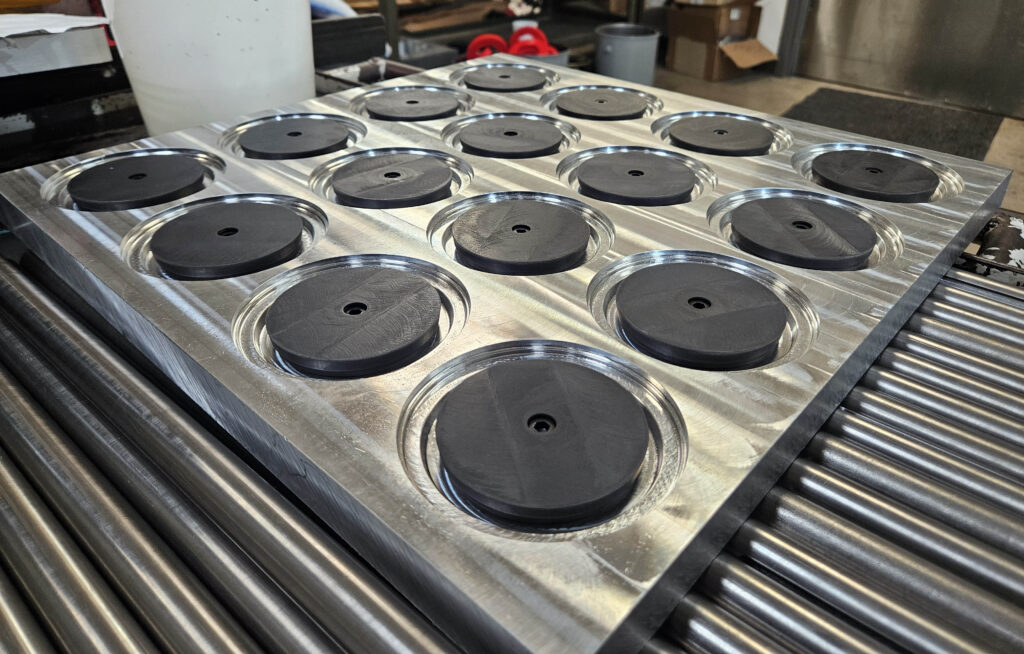
Once the design is approved, we program the tool paths for our CNC equipment. Careful programming controls cut quality, cavity detail, and surface finish. It also reduces rework, which helps us keep lead times short on custom urethane molds of every size.
Programming & Tool Pathing
Our sales engineers review your drawings, models, and application requirements before any metal is cut. We look at wall thickness, parting lines, gating, venting, and tolerances, then recommend a mold that fits your part and your volume. Catching a problem at this stage costs far less than finding it after the first pour. Early review makes urethane mold making faster and more predictable.
Design & Engineering
In-House Mold Making Capabilities
Control over tooling gives you tighter tolerances and faster turnaround. Our shop runs an in-house CNC mill and multiple CNC lathes, so the people who design your mold are the same people who build it.
CNC Machined Aluminum Molds
Aluminum is the primary material for our molds. It machines cleanly, holds fine detail, and moves heat well during cure. Our CNC mill and lathes let us cut intricate cavities with tight tolerances, and in many cases the mold produces a part that needs no secondary machining step.
3D-Printed Tooling for Small Runs
For small runs and one-off parts, 3D printed urethane molds are a lower-cost, faster option than metal tooling. They work well when you want to test a design before investing in a multi-cavity aluminum mold. There are limits on design, size, and surface finish, so ask your sales associate whether your project is a good candidate for 3D printed urethane molds.
Mold Types We Build
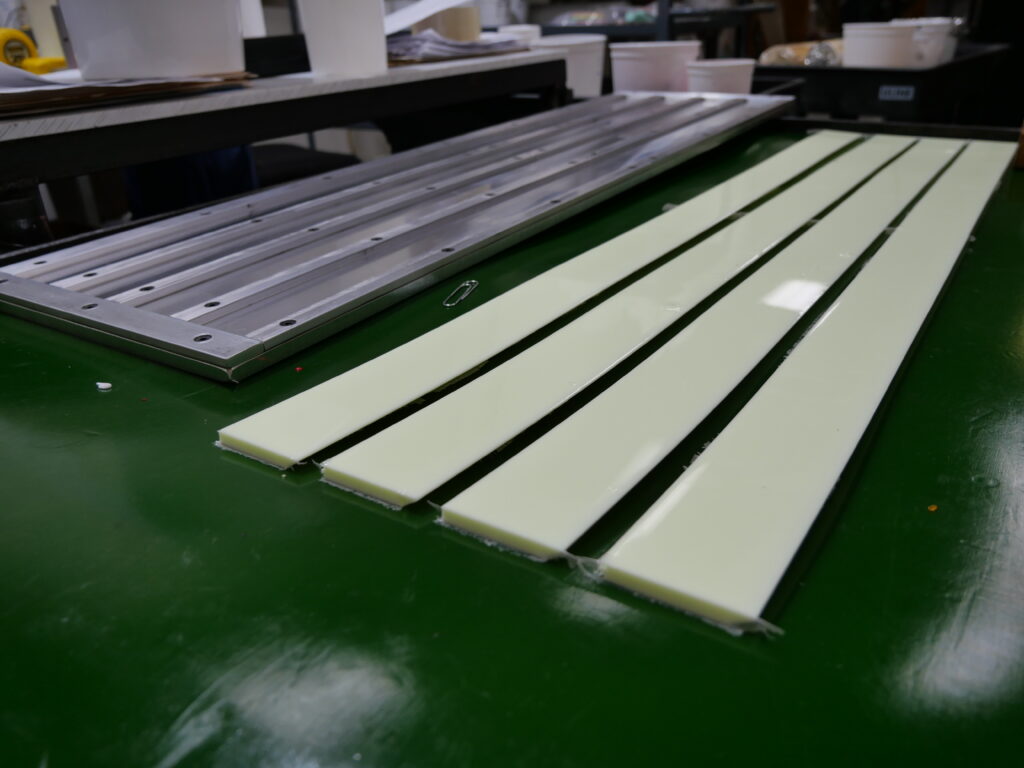
We build molds matched to the way your part will be produced. Depending on geometry and volume, that can include single-cavity compression molds, low-pressure injection molds, open cast molds, and multi-cavity or transfer compression molds. Tell us your quantity and we will recommend the right style.
Molds Built for Any Part Size
Part size should not limit what you can cast. PSI builds tooling for urethane parts that weigh less than a gram and for parts that weigh more than 2,500 lb. The same team supports short-run prototypes, low-volume orders, and high-volume production, so your tooling can grow with your program.
Custom Urethane Molds for Your Application
No two applications are alike. A wear component for a mining line, a roller for a conveyor, and a seal for a pump each place different demands on the part, and the mold has to reflect that. Our custom urethane molds are designed around your operating environment, your tolerances, and your target cost per part.
Because polyurethane mold manufacturing happens under the same roof as casting, our team can evaluate design changes quickly and determine whether the existing tooling can be modified or new tooling is needed.That flexibility is especially useful when you are moving from a prototype to production. If you are still proving a concept, our rapid prototyping service can get parts in your hands while the final tooling takes shape.
From Mold Design to Finished Part
Our work does not stop when the mold comes off the machine. The same shop casts your part, and our machining services can finish it when a feature calls for extra work. You deal with one accountable partner instead of coordinating a toolmaker, a caster, and a machine shop.
That single point of contact means fewer handoffs, fewer delays, and fewer surprises. It also means the team casting your part knows exactly how the mold was designed, because they sat next to the people who built it. You can browse our custom polyurethane products to see the range of parts this approach produces.
Request a Urethane Mold Making Quote
Ready to start? Send us your drawings, models, or a sample part, along with your expected quantities. Our team will review your project and recommend the mold design that fits your application and budget. Request a quote today and put 60 years of urethane mold making experience to work on your next part.
Frequently Asked Questions
Here are answers to common questions about our molds.
What is urethane mold making?
Designing and building the tooling used to cast a polyurethane part to shape, dimensions, and finish, machined aluminum, open-cast, or 3D-printed; done in-house before casting.
What materials does PSI use for its molds?
Primarily aluminum, machined on an in-house CNC mill and multiple CNC lathes; 3D-printed molds for small/one-off runs.
Can PSI 3D-print molds for small runs?
Yes, lower cost and faster than metal tooling, with some limits on design, size, and surface finish; ask a sales associate if your project is a good candidate.
How large a part can PSI build a mold for?
Tooling for cast urethane parts from less than a gram to over 2,500 lb; short-run prototypes through high volume.
Does PSI design molds in-house?
Yes, in-house design and machining keeps dimensions, finish, and tolerances in hand, shortens lead times, and often removes a secondary machining step.
Recommended Reads
When it comes to choosing the right material for your industrial roller applications, you may have a lot of questions. If your existing equipment came with rubber…
There are several reasons that urethane rollers are the go-to choice for many industries including food processing, steel, marine, and packaging, to name a few.…
Many organizations rely on urethane rollers for a variety of applications. Rollers made of urethane are wear resistant and can carry higher …