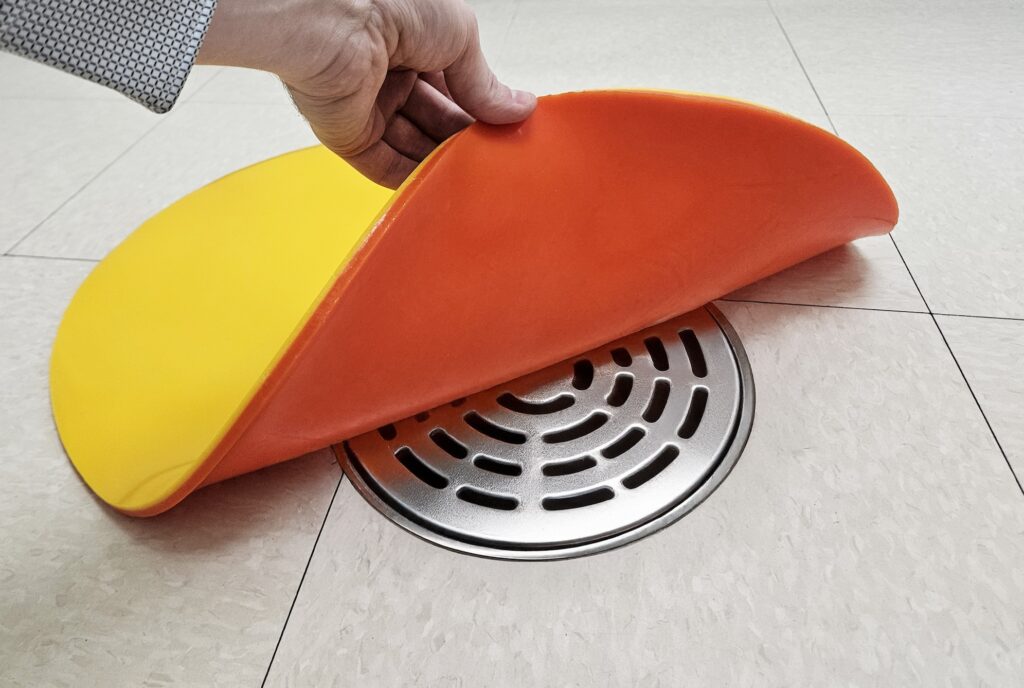
In any facility handling liquids, whether oils, coolants, chemicals, or washdown water, the floor drain is the fastest path from a controlled environment to an uncontrolled one. When a spill reaches that drain, it can trigger regulatory exposure, environmental contamination, and costly cleanup.
That makes drain protection a primary control point, not a secondary accessory.
Among modern drain protection systems, urethane drain covers act as a frontline containment solution. They are designed to block fluid entry immediately, without setup time, tools, or mechanical installation. But not all drain sealing covers perform the same. Material choice directly affects sealing reliability, repeat use, and total lifecycle cost.
This article breaks down how urethane drain covers work, where other spill control drain covers fail, and how to select the right solution for your environment.
Need a better drain protection solution? Let’s build a urethane drain cover tailored to your environment.
Urethane drain covers are flexible, reusable drain sealing covers designed to prevent liquids from entering floor drains during spills, maintenance work, or washdowns.
They are widely used across:
Unlike absorbent or containment-only drain protection systems, urethane drain covers create a direct seal over the drain opening.
Other drain protection systems include:
The key distinction is material. Urethane is an engineered elastomer, not a commodity rubber, which allows these drain covers to maintain sealing capability across repeated use and exposure conditions.
Urethane drain covers work by conforming to surface irregularities at a microscopic level. When placed over a drain, the material adapts to:
This creates a passive seal without clamps or adhesives, something many rigid drain sealing covers cannot achieve.
Mass improves sealing force. Heavier spill control drain covers made from urethane generate stronger contact pressure against the floor, improving sealing effectiveness without external fastening.
Urethane formulations can be engineered to maintain integrity when exposed to:
This gives urethane an advantage over traditional drain protection systems, which may degrade or lose sealing capability over time.
Urethane drain covers are designed for easy cleaning and rapid redeployment. After use, they can be wiped down or washed to remove oils, chemicals, and debris, allowing them to be quickly returned to service for the next spill event.
This clean-and-reuse capability reduces waste, minimizes replacement costs, and ensures operators always have a ready-to-deploy drain protection solution on hand. PSI Urethanes applies this same material approach across its custom cast urethane products, engineering formulations that maintain performance through repeated cleaning cycles in demanding environments.
The effectiveness of drain protection systems comes down to material behavior under stress. Urethane offers:
Traditional rubber-based drain sealing covers often crack, split, or degrade with repeated use. PSI Urethanes has over 50 years of experience engineering cast urethane parts that outperform conventional elastomers, delivering solutions built for demanding applications.
Most spill control drain covers are tested in controlled conditions, but real environments introduce:
Urethane drain covers maintain sealing capability across these variables due to their ability to conform and recover.
Lower-cost drain protection systems often fail sooner, leading to:
Urethane drain covers reduce total cost over time by maintaining sealing effectiveness across repeated use.
Flat urethane drain covers dominate this category. They provide:
Used for internal pipe sealing:
Not true drain protection systems:
Compared to these options, urethane drain covers provide the most consistent sealing across varied environments.
Working with complex drains or aggressive fluids? Partner with PSI Urethanes to develop custom drain sealing covers engineered to your specifications.
Spill control drain covers made from urethane can be deployed instantly:
Unlike rigid drain sealing covers, urethane adapts to real-world floor conditions.
Urethane-based drain protection systems can handle multiple fluid types when properly formulated.
Urethane drain covers maintain shape and sealing capability across repeated use cycles. PSI Urethanes supports this with custom molded urethane products engineered for long-term use in industrial environments.
Used across:
The urethane drain cover must extend beyond the drain opening:
PSI Urethanes offers a wide durometer range, allowing urethane drain covers to be engineered for specific applications.
Evaluate floor type:
More irregular surfaces require more adaptable drain protection systems.
Select the right formulation based on:
Standard urethane drain covers are effective for:
Custom drain sealing covers are needed for:
Custom solutions require:
PSI Urethanes provides in-house tooling, mold development, and casting capabilities, allowing custom urethane drain covers to be produced from drawings or sketches. Each solution is engineered for proper surface conformity, sealing performance, and real-world usability.
Most drain protection systems fail due to preventable issues:
Urethane drain covers are one component of a complete spill control approach that includes:
Their role is immediate containment at the drain level, preventing escalation.
What can custom cast urethane do for your spill control strategy? Talk to our team about designing high-quality urethane drain covers for your application.
Urethane drain covers are used to prevent liquids such as oil, chemicals, and contaminated water from entering floor drains during spills, maintenance, or washdowns. They act as a fast-deploy drain protection system that creates a reliable seal over the drain surface.
Urethane drain covers create a seal by conforming to surface irregularities and using their weight to generate contact pressure. This allows them to seal effectively on uneven or rough surfaces without the need for tools, adhesives, or mechanical fasteners.
Yes, urethane drain covers generally outperform rubber or magnetic options because they offer better conformability, chemical resistance, and durability. Unlike magnetic covers, they work on all surface types, and unlike rubber, they maintain performance over repeated use.
To choose the right urethane drain cover, consider the drain size, surface condition, chemical exposure, and frequency of use. Proper sizing and material selection are critical to ensure a reliable seal and long-term performance.